Deep Bite & Overbite
with Invisalign
in Busan
📍 Busanjin-gu, Seomyeon | ✨ Invisalign Specialist | 🌐 English OK
CS Dental Hospital in Busan Seomyeon treats deep bite and excessive overbite (수직피개/과개교합) with Invisalign clear aligners — supervised by a board-certified orthodontist. Deep bite is a condition where the upper front teeth excessively overlap the lower, often causing TMJ stress, accelerated tooth wear, and gum impingement. Invisalign has shown strong results for deep bite correction — particularly through its bite ramp feature and controlled extrusion mechanics.
Invisalign's bite ramp feature makes it highly effective for deep bite correction. CS Dental Hospital provides board-certified orthodontist-supervised Invisalign for deep bite in Busan Seomyeon — with TMJ assessment included. English OK.
Orthodontist-supervised treatment.
International patients welcome.
Deep Bite & Overbite (수직피개 / 과개교합) — Invisalign Treatment in Busan
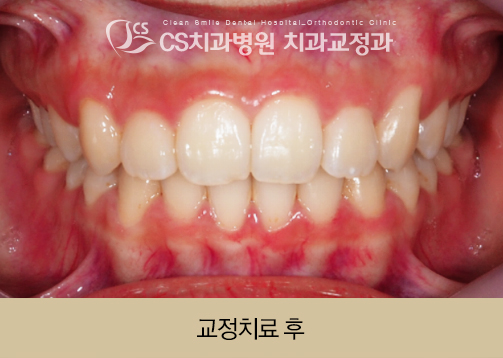
Deep bite (과개교합) occurs when the upper front teeth excessively overlap the lower — in severe cases, the lower teeth may be almost entirely hidden when biting. The normal overlap should be approximately one-third of the lower tooth height. When the overlap significantly exceeds this, the lower front teeth contact the palate, leading to soft tissue irritation, progressive tooth wear, and increasing stress on the temporomandibular joint (TMJ).
Invisalign corrects deep bite through a combination of techniques: bite ramps built into the aligner surface prevent the back teeth from fully contacting during wear (temporarily opening the bite), while anterior intrusion mechanics move the upper front teeth vertically into a less overlapping position. The posterior teeth are simultaneously managed to prevent unwanted changes to the vertical dimension of the bite.
Invisalign Bite Ramps — Why They Matter for Deep Bite
Invisalign aligners can incorporate precision bite ramps — small slopes built into the aligner surface that contact the lower front teeth when the mouth closes. These ramps disocclude (separate) the back teeth during wear, allowing the posterior bite to settle into a more open vertical dimension over time. This feature, combined with programmed tooth movements, makes Invisalign particularly effective for deep bite cases — a significant advantage over traditional braces for this condition.
TMJ Connection — Deep Bite and Jaw Joint Health
Deep bite is frequently associated with TMJ symptoms — because the jaw is being forced into a retruded position by the deep bite, placing chronic stress on the joint. CS Dental's standard TMJ assessment before treatment ensures that deep bite correction relieves, rather than worsens, joint symptoms. Where TMJ symptoms are present, splint therapy may be initiated before Invisalign to stabilise the joint position first.
How Invisalign Treats This Condition at CS Dental Busan
Condition-specific aligner mechanics — planned by your board-certified orthodontist.
Bite Ramp Mechanics
Invisalign Feature · Deep Bite SpecificPrecision bite ramps built into aligner surface disocclude posterior teeth during wear — allowing vertical dimension opening progressively without surgery.
- Precision bite ramps in aligner
- No separate appliance needed
- Posterior bite gradually opens
- Smooth progressive correction
Anterior Intrusion
Front Teeth Vertical CorrectionUpper and/or lower front teeth intruded (moved vertically) to reduce the excessive overlap. Combined with bite ramps for coordinated vertical correction.
- Anterior teeth intruded
- Reduces excessive overlap
- Combined with bite ramp effect
- Predictable vertical correction
TMJ-Integrated Treatment
Jaw Joint Health MonitoredTMJ assessed before treatment. Where TMJ symptoms present, stabilised first with splint therapy before Invisalign begins. Joint health monitored throughout.
- TMJ evaluated before treatment
- Splint therapy if needed first
- Joint health monitored
- Prevents treatment-induced aggravation
Your Invisalign Journey at CS Dental Busan
From ClinCheck simulation to final retainer — specialist supervised.
TMJ & Deep Bite Assessment
Cephalometric analysis measures overbite degree. TMJ evaluated — joint position, symptoms, clicking. Bite ramp requirements planned. ClinCheck simulation produced.
ClinCheck Deep Bite Correction Preview
Digital simulation shows progressive overbite reduction. Bite ramp positions confirmed. Anterior intrusion mechanics reviewed. Patient approves treatment plan.
Active Treatment with Bite Ramps
Aligners worn 22 hrs/day. Bite ramps engage lower teeth on each wear — posterior bite opens gradually. Anterior intrusion proceeds through aligner sequence. TMJ monitored.
Retention — Vertical Stability
Retainers fitted. Deep bite has moderate relapse tendency in the vertical dimension — robust retention protocol applied. Follow-up at 3, 6, and 12 months.
Are You a Good Candidate for Invisalign?
✓ Good Candidates
- Adults with excessive overbite where upper teeth cover more than half of lower teeth
- Patients with deep bite-related TMJ symptoms wanting combined bite and joint treatment
- Adults with gum impingement behind upper front teeth caused by deep bite
- International patients wanting clear aligner treatment for deep bite in Busan
ⓘ Important Considerations
- Very severe skeletal deep bite may require combined orthognathic surgery for complete correction
- Deep bite cases with active severe TMJ symptoms need joint stabilisation before Invisalign begins — adding time to treatment
- Long-term retention is essential for vertical correction — deep bite has moderate relapse tendency
Invisalign FAQ — Busan
Common questions about Invisalign treatment for this condition.
Can Invisalign fix a deep bite or overbite?
What are Invisalign bite ramps?
Does deep bite affect the jaw joint (TMJ)?
Is deep bite Invisalign treatment available in English in Busan?
Book Your Deep Bite Invisalign Consultation
in Busan — English OK
Bite ramp mechanics. TMJ assessed. Board-certified orthodontist. 1-min from Seomyeon Station.